Classic Baked Beef Lasagna with Rich Cheese Sauce
The ground beef simmers for 1.5 to 2 hours to build a tender meat base for this baked Lasagna, and a smooth white cheese sauce coats every layer.
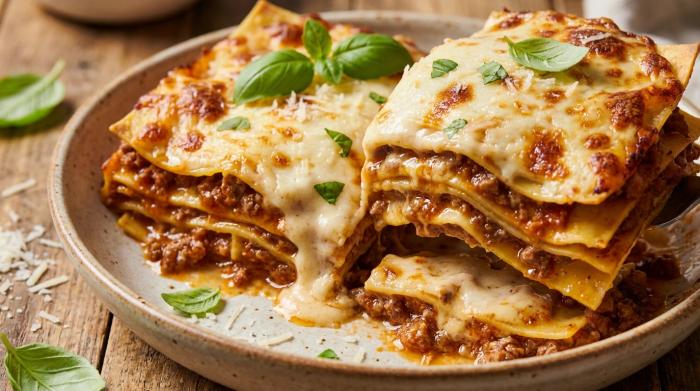
Building a sturdy Classic Baked Beef Lasagna with Rich Cheese Sauce requires patience and a heavy pot. The ground beef simmers for up to 2 hours to develop a tender Ragu. A blanket of smooth Cheese Sauce tops each tier of pasta before a 25-minute trip to a 350°F (180°C) oven.
The Ragu
Begin the Ragu by heating olive oil in a large pot over medium heat. Toss in the chopped onion, finely diced carrot, finely diced celery, and minced garlic. Cook these aromatics for ten minutes over moderate heat until they soften and release their natural sugars. Avoid browning the vegetables to maintain a sweet flavor base. Add the ground beef and use your spoon to break the meat apart, cooking until every section turns completely brown. Mixing ground pork with the beef is another option that balances tenderness with a strong beefy flavor.
Add the crushed tomatoes, tomato paste, dry red wine, crumbled bouillon cubes, bay leaves, thyme, oregano, and Worcestershire sauce. If you prefer, non-alcoholic red wine or beef broth can replace the dry red wine. Lower the stove setting until the liquid barely simmers with tiny surface breaks. Cover the pot tightly. The closed environment tenderizes the meat during the 1.5 to 2 hours of cooking.
Check the liquid level occasionally if you use a lighter pot instead of a heavy one. You might need to stir in a splash of water so the Ragu does not dry out. Remove the lid for the final thirty minutes to reduce the liquid. Economical canned tomatoes sometimes carry an acidic edge. Taste the cooked mixture and stir in one to two teaspoons of sugar if the acidity requires balancing.
The Cheese Sauce
Warm the milk in a separate container before you add it to the roux. Warm liquid helps the sauce thicken faster. Melt the butter in a second large pot and whisk in the flour. Stir the mixture continuously for one minute. Pour about one cup of the warm milk into the cooked flour mixture gradually. This slow addition keeps lumps from forming.
Add the rest of the milk once the flour dissolves into a smooth paste. Increase the burner to medium-high and stir for five to eight minutes until the liquid coats the back of your spoon. Take the pot off the heat.
Grating a solid block of cheese guarantees a smooth finish for your Cheese Sauce. Packaged pre-shredded options are treated to keep the shreds from sticking together, and those additions will make your melted liquid grainy. Stick to blocks of cheddar, colby, Monterey Jack, or gruyere for a seamless melt. Fold your chosen cheese into the pot alongside a pinch of freshly ground nutmeg, salt, and pepper. Keep stirring until no solid pieces remain. If the resulting mixture feels too tight, thin it with a splash of water or milk. The final liquid must be loose enough to pour easily from your spoon, similar to heavy cream.
Choosing the pasta
Fresh lasagna sheets meld closely with the fillings and stay flat during baking without buckling into wavy shapes. You can use instant dried pasta sheets instead. Make sure your Ragu retains enough liquid if you choose instant dried sheets. A dry meat base prevents the pasta from hydrating fully in the oven. Add a drop of oil to the water if you boil traditional dried sheets so they do not stick together.
Layering the pan
Smear a thin scrape of the meat mixture directly on the bottom of the 13 x 9 x 2.5-inch (33 x 22 x 7 cm) pan. This base prevents the bottom pasta sheets from sliding. Cut or break the pasta to fit the exact dimensions of your baking dish.
Spoon two and a half cups of the meat mixture over the pasta. Drizzle one cup of the white Cheese Sauce evenly over the meat. Alternate the direction of the pasta sheets by ninety degrees on each new layer. The crossing pattern helps the assembled dish hold its shape when you slice it later.
Repeat the sequence of pasta, meat, and white sauce until you have four tiers of pasta in total. Pour all of the remaining white Cheese Sauce across the top. Scatter the shredded mozzarella evenly over the surface. Mozzarella provides excellent melting qualities for the topping without becoming greasy.
Resting and storage
Bake the dish for 25 minutes until the cheese on top turns lightly browned and the edges actively simmer. The baked dish needs five to ten minutes of resting time on the counter before you cut into it. The brief pause allows the internal layers to set. Garnish the cut portions with finely chopped basil or parsley right before eating.
The fully assembled and baked pan freezes perfectly for later use. Add about a quarter cup of extra water when reheating the Ragu if you make the meat sauce ahead of time by itself. The extra moisture restores the correct consistency.
Classic Baked Beef Lasagna with Rich Cheese Sauce
Ragu
- 2 lb ground beef
- 3 beef bouillon cubes, crumbled
- 1 white, yellow, or brown onion, finely chopped
- 1 medium carrot, peeled and very finely diced
- 1 celery stick, very finely diced
- 2 garlic cloves, minced
- 28 oz canned crushed tomatoes
- 0.25 cup tomato paste
- 1 tsp sugar
- 1 tbsp olive oil
- 1 cup pinot noir or other dry red wine
- 2 tsp Worcestershire sauce
- 2 bay leaves, dried or fresh
- 0.5 tsp each dried thyme and oregano
- 0.5 tsp salt and black pepper
Cheese Sauce
- 0.5 cup flour
- 4 tbsp butter
- 4 cup milk, full fat or low fat
- 2 cup shredded gruyere or Colby cheese, or cheddar, Monterey Jack, or 3.5 oz / 100 g shredded parmesan
- Pinch of freshly ground nutmeg
- Salt and pepper
Assembly
- 12 oz fresh lasagna sheets, or 8 oz / 250 g dried
- 1.5 cup tightly packed shredded mozzarella cheese
- Finely chopped basil or parsley, for garnish
We may earn a small commission from grocery & equipment links, at no cost to you. Disclosure.
Method
Ragu
Cheese Sauce
Assembly
Substitutions
Substitute beef broth or non-alcoholic red wine for the dry red wine in the Ragu.
Mix ground pork with the ground beef to balance the tenderness and savory flavor of the Ragu.
Storage
Fully assemble and bake this dish before freezing it for a reliable make-ahead meal.
Add about 1/4 cup of water when reheating made-ahead Ragu to restore its original consistency.
Common mistakes
Skip pre-shredded cheese; the powdery coating on the shreds keeps the Cheese Sauce from turning fully smooth.
Instant dried pasta sheets drink up moisture in the oven, so keep the Ragu on the loose, saucy side.
Techniques
Alternate the direction of the pasta sheets by ninety degrees on each layer to help the assembled dish hold its shape when cut.
Warm the milk before whisking it into the flour mixture to help the Cheese Sauce thicken faster.
Always let hot baked pasta casseroles rest briefly before slicing so the internal layers firm up and do not slide apart.
Take the time to thoroughly brown ground meat before adding liquids to build a deep, savory flavor foundation.
- Store
- Fully assemble and bake this dish before freezing it for a reliable make-ahead meal. Add about 1/4 cup of water when reheating made-ahead Ragu to restore its original consistency.
Can I use dried lasagna noodles instead of fresh?
Yes, you can substitute 8 oz (250 g) of dried pasta. If you use instant no-cook sheets, ensure your Ragu retains plenty of liquid to hydrate them in the oven, and if you boil traditional dried sheets, add a drop of oil to the water so they do not stick together.
What can I use if I do not want to cook with dry red wine?
You can easily replace the 1 cup of dry red wine in the Ragu with beef broth or a non-alcoholic red wine. Both alternatives will maintain the rich flavor of the meat sauce.
Why did my Cheese Sauce turn out grainy instead of smooth?
Grainy sauce usually happens when using bags of pre-grated cheese, which contain dry anti-caking coatings. Always shred a solid block of cheese yourself to ensure a clean, smooth melt.
Can I prepare the Ragu ahead of time?
Yes, you can cook the Ragu in advance and store it in the refrigerator. When you are ready to assemble the dish, add about 1/4 cup of extra water while reheating the meat sauce to restore its correct consistency.
Can I freeze this dish?
Yes, the fully assembled and baked dish freezes perfectly for future meals. Let the pan cool completely before wrapping and storing it in the freezer.
Why is it important to alternate the direction of the pasta sheets?
Rotating your pasta sheets by ninety degrees on each new layer creates an interlocking structure. This crossing pattern helps the assembled dish hold its shape perfectly when you slice it into portions.
How do I keep lumps from forming in a cream sauce?
Warming your milk before use and whisking it into the hot roux very gradually is the best way to prevent stubborn lumps. Adding a small amount of liquid at first creates a smooth paste that easily accepts the rest of the milk.
Why do I need to rest a baked casserole before serving?
Casseroles need a brief resting period on the counter so the bubbling hot liquids can cool slightly and thicken. This pause allows the internal structure to set, ensuring your slices stay intact on the plate instead of sliding apart.
Why shouldn't I brown the chopped vegetables for the meat base?
Sweating aromatic vegetables gently over moderate heat without browning them creates a sweet and mellow flavor base. Developing dark color on the vegetables can add bitter notes that overpower a slow-simmered savory dish.
Add a private note
Private to this device - jot your tweaks, swaps and timings. (Syncs to your account later.)
What to serve with it
See all →


You might also like
See all →



The Friday 3-recipe dinner plan 🧡
Every Friday: three tested weeknight dinners + one shopping list, ready to go. No spam, ever - unsubscribe anytime.