Crisp Marshmallow-Centered Pavlova With Fresh Fruit
A slow bake and a long overnight rest in the oven give this classic fresh fruit pavlova a delicate shell and a soft center.
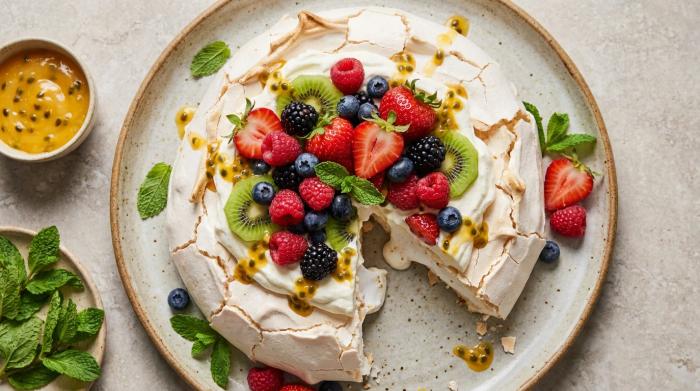
Cold egg whites measured by volume build a stable foundation for a Classic Baked Summer Pavlova with Fresh Fruit. A hot oven quickly sets the crisp shell, while a slow 1.5-hour bake leaves the marshmallow center intact. Freshly whipped cream and berries cut the sweet base.
Preparing the eggs
Measure your egg whites by volume instead of counting whole eggs to account for size variations. You need exactly 5 oz (150 ml) of egg whites. Pick eggs that are at least four or five days old. Freshly laid farm eggs have tight whites that resist whipping and drastically increase your mixing time.
Separate the eggs while they are cold. Cold yolks break less easily. Do not get even a microscopic drop of egg yolk in the whites. Fat prevents the foam from forming. Wash and thoroughly dry all mixing bowls and beaters to remove any trace of grease or water. Let the measured whites sit on the counter until they reach room temperature to achieve maximum volume.
Mixing the Meringue Base
Beat the room-temperature egg whites on high until all the liquid turns to foam. Whip the foam for one additional minute to reach soft peaks.
Keep the mixer running and add the sugar exactly one tablespoon at a time. Beat the mixture continuously for three minutes after you add the last scoop of sugar.
Rub a small pinch of the whipped meringue between two fingers. The mixture should feel completely smooth. You need to mix longer if you feel any undissolved sugar grit.
Add the sifted cornstarch and the white vinegar to the bowl. These two ingredients stabilize the whipped egg whites to support the height of the baked meringue. Fold them in briefly or beat on low for just five to seven seconds. Do not overmix, or you will deflate the fluff.
Shaping the dome
Find the bottom plate of a 9.5-inch (24 cm) or larger springform pan. Flip it upside down. Smear a tiny bit of meringue onto the inverted plate and press a sheet of parchment paper over it. The dabs of meringue glue the paper securely in place.
Gently place half of the meringue in the middle of the parchment paper. Scoop the rest of the mixture directly on top of the first mound.
Shape the raw meringue into a flat-topped dome with slightly sloping edges to maximize structural stability. The mound should measure 8 inches (20 cm) across. Avoid building straight walls. Flatten the top until the structure stands no taller than 2 inches (4 to 5 cm) high. A raw meringue taller than two inches will likely crack.
Baking and cooling
Preheat the oven to 340°F (170°C). This higher temperature jumpstarts crust formation. Take care when moving the baking tray into the hot oven. Push the door shut softly and lower the heat right away to 240°F (115°C). A high oven temperature forces the meringue to puff quickly and collapse.
Bake the pavlova for 1.5 hours. Do not open the oven door or cause heavy floor vibrations while the meringue bakes. A large disturbance can make the delicate structure collapse.
Turn the oven off when the timer finishes. Keep the door shut completely. Let the pavlova sit inside for 18 hours or overnight to cool slowly.
The Whipped Cream and Fruit Garnish
Put the heavy cream, sugar, and vanilla extract into a clean bowl. Beat the liquid just until it grows thick enough to hold a soft form. Stop the mixer before the peaks turn rigid. You want a sleek finish without any tiny air pockets.
Loosen the bottom edges of the cooled pavlova and slide the pan plate out. Carefully slide the parchment paper out from under the meringue. The inverted pan base makes it easy to slide the finished dessert onto a platter.
You can use extra Whipped Cream to patch or conceal any structural cracks in the baked meringue. Spread the cream over the top right before you plan to eat.
Place your Fruit Garnish onto the crust gently by hand. Heavy fruit poured onto the center of the baked shell all at once will crush the delicate crust.
Serving and storage
Serve the fully assembled dessert within twenty to thirty minutes. The crust will begin to soften after this time.
Keep the completely cooled, undecorated Meringue Base closed securely inside a storage bin on the kitchen counter. Do not place the bare shell in the refrigerator. Bringing a chilled bake back out into the ambient air of the kitchen causes condensation to form, which softens the crust.
Crisp Marshmallow-Centered Pavlova With Fresh Fruit
Meringue Base
- 5 oz egg whites, from 4 to 5 cold eggs
- 1 cup caster (superfine) sugar
- 1 tbsp cornstarch (cornflour), sifted
- 1 tsp white vinegar
Cream and Fruit
- 0.25 cup caster (superfine) sugar
- 1.5 cup heavy cream, thickened or whipping cream
- Fresh fruit of choice, like raspberries, blueberries, strawberries, and cherries
- 1 tsp vanilla extract or essence
We may earn a small commission from grocery & equipment links, at no cost to you. Disclosure.
Method
Meringue Base
Cream and Fruit
Storage
Keep the completely cooled, bare meringue base inside a tightly closed box on the counter. Never place the undecorated shell in the refrigerator, because bringing it back into the ambient kitchen air causes condensation that softens the crust.
Serving
Keep a little extra Whipped Cream on hand when decorating so you can easily patch and conceal any structural cracks in the baked shell.
Assemble the Classic Baked Summer Pavlova with Fresh Fruit immediately before eating, and plan to serve it within twenty to thirty minutes so the crust does not have time to soften.
Common mistakes
Shape the unbaked meringue dome so it stands no taller than 2 inches (4 to 5 cm), because building the mound any higher increases the risk that large splits will form in the crust during the bake.
Avoid baking massive meringue structures exceeding a four-egg volume during hot and humid weather to minimize the risk of a complete collapse.
Place the Fruit Garnish onto the crust gently by hand instead of pouring it, since dropping a heavy pile all at once will crush the delicate shell.
Techniques
Measure your egg whites by volume to account for size variations, and try to use eggs that are at least four or five days old so the whites whip up beautifully.
Use a metal or glass mixing bowl rather than plastic to whip egg whites, since plastic containers often harbor hidden greasy residues that prevent foaming.
Separate each cold egg over a small bowl before adding the white to your main mixing vessel so that an accidental yolk break does not ruin the entire batch.
- Store
- Keep the completely cooled, bare meringue base inside a tightly closed box on the counter. Never place the undecorated shell in the refrigerator, because bringing it back into the ambient kitchen air causes condensation that softens the crust.
How far in advance can I make the Meringue Base?
The fully cooled, undecorated meringue shell can be baked ahead of time. Keep it stored inside a tightly sealed box on the kitchen counter. Avoid putting the bare base in the refrigerator, because pulling the chilled dessert out into a warmer environment creates condensation that softens the crust.
Why did my Meringue Base crack or collapse in the oven?
Severe cracking usually happens if the raw dome is built taller than 2 inches (4 to 5 cm) high. The delicate structure can also collapse if you bake large amounts during hot and humid weather, open the oven door while baking, or use too high of an oven temperature.
Why must I let the cold egg whites warm up on the counter prior to whipping them?
Room-temperature egg whites whip up faster and achieve their maximum volume. However, you should always separate the yolks from the whites while the eggs are still cold because cold yolks break less easily.
What kind of mixing bowl is best for beating egg whites?
Use a thoroughly washed and dried metal or glass mixing bowl. Plastic containers often harbor hidden greasy residues that prevent the egg whites from foaming properly.
Will the whites still whip if a trace amount of egg yolk falls in?
Even a microscopic amount of fat from an egg yolk will prevent the whites from forming a foam. To prevent an accidental yolk break from ruining your entire batch, separate each cold egg over a small bowl before transferring the white to your main mixing vessel.
Can I fully assemble the Classic Baked Summer Pavlova with Fresh Fruit before my guests arrive?
You should wait to add the Whipped Cream and Fruit Garnish until immediately before you plan to eat. If the dessert sits fully assembled for more than twenty to thirty minutes, the moisture from the toppings will begin to soften the crisp crust.
What is the purpose of adding white vinegar and cornstarch?
These two ingredients stabilize the whipped egg whites. This extra stability supports the height of the baked Meringue Base so the marshmallow-like center stays intact.
How do I fix a crack in the baked shell before serving?
You can easily patch and conceal any structural cracks in the baked shell by spreading a little extra Whipped Cream over the damaged areas. Just be sure to place your Fruit Garnish on top gently by hand instead of pouring it, which could further crush the delicate crust.
Add a private note
Private to this device - jot your tweaks, swaps and timings. (Syncs to your account later.)
What to serve with it
See all →
You might also like
See all →
The Friday 3-recipe dinner plan 🧡
Every Friday: three tested weeknight dinners + one shopping list, ready to go. No spam, ever - unsubscribe anytime.