
Deep Dark Homemade Beef Stock from Scratch
Roasting the bones first darkens this homemade beef stock and extracts the natural gelatin so it sets into a thick jelly when chilled.
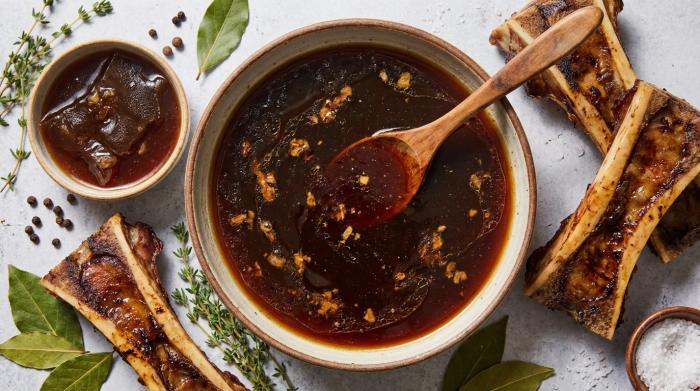
Cooking tomatoes with browned meaty beef bones gives this Clear and Dark Homemade Beef Stock Recipe from Scratch its rich amber shade. Eight hours on a low burner extracts gelatin, creating a salt-free base that solidifies in the refrigerator. The process yields 1.25 to 1.5 quarts (1.25 to 1.5 liters).
Bone Roasting
Meaty beef bones provide the essential base. Meatless bones leave the stock bland. Avoid fatty brisket bones because they lack enough meat and yield excess fat. Back and neck bones work well. You can add one marrow bone or knuckle for extra fat.
Preheat the oven to 430°F (220°C) or 200°C fan-forced. Arrange 5 lb (2.5 kg) of bones evenly across two bare baking trays. Cook them for one hour until they turn dark brown. Turn them over at the 30 minute mark.
Pan Deglazing
Carefully drain the excess fat from the pans. Transfer the bones into a large 7 quarts (7 liters) or larger pot.
Set one empty tray over a medium burner. Add 3/4 cup of water. The hot water dissolves the baked-on drippings as it simmers. Scrape the tray to loosen the bits. Pour the dark liquid into the main pot. Repeat this process with the other tray.
The aromatics and water
Add one unpeeled halved carrot, half a peeled onion, one stalk of celery, and two quartered tomatoes. The tomatoes add sweetness and darken the color. Pour in one tablespoon of apple cider vinegar to help extract nutrients from the bones. Half a tablespoon of coriander seeds adds an underlying layer of savory complexity along with half a tablespoon of black peppercorns, two fresh bay leaves, two sprigs of thyme, and an optional 12 sprigs of parsley.
Press the roasted pieces and aromatics down snugly inside the pot. This step limits the volume of liquid necessary to submerge everything. Pour in a maximum of 5.75 quarts (5.75 liters) of cold tap water until the fluid rests just above the solid ingredients.
Stock Simmering
Turn the heat to medium-high and bring the liquid to a boil. Drop the burner down to a low setting. Keep an eye on the pot to make sure the liquid barely simmers. Vigorous boiling with bones makes the final product cloudy. You only want to see a single tiny bubble pop at the surface occasionally. Skim any surface scum off the top.
Leave the pot with no lid. Cook on a low setting for eight hours until the liquid reduces to 4 quarts (4 liters). You can also choose an alternative cooking method:
- Simmer over low heat for three hours on medium-low with the lid cracked.
- Start with a rapid boil on the stove, put the lid on, and bake the pot for eight to 10 hours at 250°F (120°C) to yield 0.5 quarts (500 ml) to 1.5 quarts (1.5 liters).
- Use a slow cooker on low for eight to 10 hours to yield 1.5 quarts (1.5 liters).
Straining & Finishing
Scoop the majority of the bones out of the pot first. You will have an easier time pouring the liquid without the large pieces in the way.
Set a fine sieve over a clean bowl to strain the stock and vegetables. Leave the sieve to drain for several minutes.
Putting a hot pot directly into the fridge dangerously heats up the appliance. To prevent bacterial growth, take the pot off the heat and submerge it halfway down into a sink holding cold liquid. Cool the stock for one hour and 15 minutes until it completely sheds its heat. The basin gets warm while the pot sits in the sink, so replace the bath liquid every 20 minutes.
Check how much liquid is in the pot. You want to see between 1.3 and 1.7 quarts (1.3 to 1.7 liters). Turn the heat on again to reduce the stock on the stove if you have much more than this. A failure to reduce the volume leaves the flavor weak.
Leave the stock in the refrigerator overnight. The fat rises to the top and hardens into a white cap. Skim this solid layer away the next day. You will finish with 1.25 to 1.5 quarts (1.25 to 1.5 liters) of clear liquid.
Storing and serving the stock
Connective tissue provides the natural gelatin that causes the chilled stock to turn into a thick jelly. If you need to measure specific amounts, heat the solid block on the stove over medium-high for under a minute to melt it back into a pourable liquid. Alternatively, you can drop the cold stock directly into your dishes while it remains in its jellied state.
Homemade stock lacks the added salt found in commercial versions. Swap this beef stock into your recipes at a 1:1 ratio. Stir 1/4 teaspoon of salt into a 1 cup (250 ml) portion to match the salinity of store-bought low-sodium stock.
The stock keeps in the refrigerator for up to seven days. It can freeze for up to three months. You can simplify future use by freezing the liquid in pre-measured one-cup or two-cup portions.
You can pan-fry the cooked meat left on the bones with butter and garlic or mix it with barbecue sauce.
Deep Dark Homemade Beef Stock from Scratch
Ingredients
- 5 lb meaty beef bones, preferably back and neck, plus 1 marrow bone or knuckle
- 1 carrot, unpeeled and halved
- 0.5 brown or yellow onion, peeled and halved
- 2 tomatoes, quartered with seeds kept in
- 1 celery stalk, cut in half or thirds, leaves on ok
- 1 tbsp apple cider vinegar
- 3 quart cold tap water
- 0.5 tbsp coriander seeds
- 0.5 tbsp black peppercorns
- 2 fresh bay leaves, or 1 dried
- 2 sprigs thyme, or 0.5 tsp dried leaves
- 12 sprigs parsley, optional
We may earn a small commission from grocery & equipment links, at no cost to you. Disclosure.
Method
Oven Roasting
Pan Deglazing
Simmering Methods
Straining & Chilling
Storage
Store the finished liquid in the refrigerator for up to seven days, or freeze it in handy one-cup or two-cup portions for up to three months.
Serving
Stir one-quarter teaspoon of salt into every one cup (250 ml) portion to perfectly match the salinity of store-bought low-sodium options.
Pick the leftover cooked meat off the bones to pan-fry with butter and garlic or toss with barbecue sauce.
Common mistakes
Avoid using overly fatty brisket bones or completely meatless pieces, as this will leave your Deeply Roasted Homemade Beef Stock Recipe tasting exceptionally bland.
Maintain a very gentle heat during the Stock Simmering phase because an aggressive boil will turn the liquid cloudy.
Do not put a hot pot of stock straight into your fridge, as doing so will dangerously warm up the inside of the appliance.
Techniques
Take your time with the Bone Roasting step to ensure the pieces turn very well browned and develop the savory complexity needed for the broth.
Thoroughly scrape the baking trays during Pan Deglazing to capture all the caramelized drippings that provide rich color.
If your final yield after Straining & Finishing exceeds 1.7 quarts (1.7 liters), reduce the liquid briefly on the stove to prevent a weak flavor.
Always skim the surface of a gently simmering broth regularly to remove foam and impurities that can muddy the final flavor.
Cool large pots of hot liquid rapidly by submerging them partially in a sink filled with cold water to safely drop the temperature and prevent bacterial growth.
- Store
- Store the finished liquid in the refrigerator for up to seven days, or freeze it in handy one-cup or two-cup portions for up to three months.
Why did my Deeply Roasted Homemade Beef Stock Recipe turn into a solid block of jelly in the fridge?
A firm gel means your stock is perfect. The slow simmering process extracts natural gelatin from the connective tissue on the bones, which causes the cold liquid to set into a thick jelly. The heat will melt it back into a pourable liquid in less than a minute on the stove.
What causes beef stock to turn cloudy?
A cloudy broth is usually the result of aggressive boiling. Maintaining a very gentle heat prevents the fats and proteins from emulsifying into the liquid, so always keep your stock at a bare simmer.
Can I use dried herbs if I do not have fresh ones?
Yes, you can easily substitute dried herbs in this recipe. Use one dried bay leaf in place of the two fresh ones, and half a teaspoon of dried thyme leaves instead of the fresh sprigs.
What should I do if I end up with more than 1.7 quarts (1.7 liters) of liquid after Straining & Finishing?
Turn the heat back on and briefly reduce the stock on the stove. A failure to reduce the volume leaves the final flavor tasting weak.
Do I really need to roast the bones before making stock?
Yes, Bone Roasting is a crucial step. The high oven heat develops a deep, caramelized crust that provides the dark color and rich, savory complexity needed for a flavorful broth.
Why is apple cider vinegar included in the ingredients?
Pouring one tablespoon of apple cider vinegar into the pot pulls nutrients from the beef bones as the liquid simmers.
How much salt does this stock need before I use it?
The finished liquid is completely unsalted. Swap it into your recipes at a 1:1 ratio as is, or stir 1/4 teaspoon of salt into a 1 cup (250 ml) portion to perfectly match the salinity of store-bought low-sodium options.
What is the safest way to cool a large pot of hot stock?
Putting a hot pot of stock directly into the refrigerator creates a dangerous heat spike inside the appliance. You must cool the large batch rapidly to stop bacterial growth. Drop the heat safely by resting the pot halfway submerged in a sink of cold water.
What should I do with the leftover meat on the bones?
Do not throw it away. You can pick the leftover cooked meat off the bones to pan-fry with butter and garlic, or toss it with barbecue sauce for a quick meal.
How do I freeze the stock once it has set into a firm gel?
Turn the stove to medium-high for less than a minute to melt the solid block back into a pourable liquid. Pour it into pre-measured one-cup or two-cup portions, which will simplify future use and keep in the freezer for up to three months.
Add a private note
Private to this device - jot your tweaks, swaps and timings. (Syncs to your account later.)
What to serve with it
See all →




You might also like
See all →
The Friday 3-recipe dinner plan 🧡
Every Friday: three tested weeknight dinners + one shopping list, ready to go. No spam, ever - unsubscribe anytime.