Hearty Red Wine Beef Stew with Carrots and Potatoes
The chuck roast simmers on the stove until the meat turns soft and the broth cooks down into a light gravy for this red wine Beef Stew.
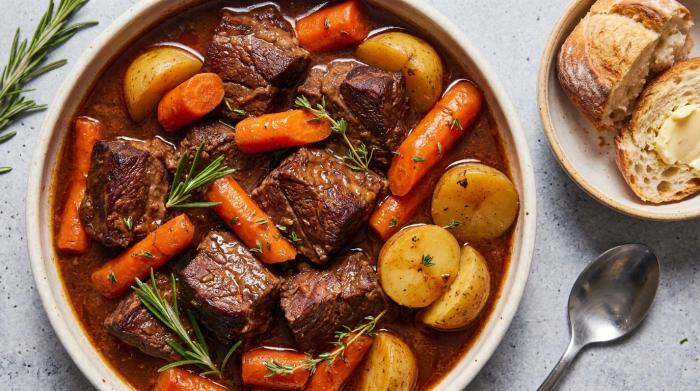
This red wine beef stew uses a long braise to break down 1.5-inch (3.5 cm) cubes of chuck beef. Simmering the pot with a lid on for 1 hour 45 minutes ensures the meat and baby potatoes become completely soft. Taking the cover off afterward reduces the savory liquid into a light gravy.
Choosing the beef
Begin with 2.4 lb (1.2 kg) chuck beef, preparing it in 1.5-inch (3.5 cm) cubes. Chuck delivers optimal flavor, fat marbling, and texture for long braising. Brisket, gravy beef, and rib meat without the bone are also suitable cuts for this stew. You must slice the beef into large pieces so it does not overcook during the slow braise. Cutting the roast into small fragments causes the meat to finish cooking too early.
Searing in batches
Do not cram all the beef into the pot at once. A crowded pot causes the meat to steam rather than brown. You must sear the meat aggressively on all sides. This builds a dark crust on the meat and leaves browned bits on the bottom of the pot. These browned bits darken the sauce color and make the liquid taste savory.
You cook 1 large onion, halved and cut into 0.4-inch (1 cm) slices, along with minced garlic directly in the residual beef fat. The vegetables absorb the beef drippings as they soften. Next, you stir in 3 carrots, cut diagonally into 1-inch (2.5 cm) pieces, and 2 celery stalks, cut into 1-inch (2.5 cm) pieces.
The braising liquid
You need 2 cups (500 ml) dry red wine, such as Cabernet Sauvignon, Burgundy, or Merlot. Full-bodied, affordable red wines like Shiraz also work well. Light wines like Pinot Noir are not suitable for this dish. The alcohol evaporates entirely during cooking. If you want an alcohol-free stew, replace the wine with an equal amount of extra beef broth and two teaspoons of brown sugar.
You stir 1/3 cup (50 g) flour into the vegetables to act as a thickening agent. You then pour in 3 cups (750 ml) low-sodium beef broth along with the wine. The tomato paste adds a touch of sourness to balance the heavy meat. Worcestershire sauce makes the stew taste more savory.
Simmering the stew
You add the seared beef, 14 oz (400 g) baby potatoes, halved, and the herbs back to the pot. The stew requires a long simmer on the stove. The beef becomes tender when you simmer the pot covered for the first hour and forty-five minutes. You remove the lid for the final thirty minutes to reduce the liquid into a thick gravy.
Alternative heating methods work just as well for this dish. For baking, place the covered pot in the oven at 300F (150C) for two and a half hours, then remove the lid for the final thirty to forty-five minutes. When utilizing a slow cooker, decrease the broth by one cup, run the appliance on low for eight hours, and let the meal rest for fifteen minutes before serving. To cook the dish under pressure, omit one cup of the broth and set the machine to high for forty minutes.
Sides and bases
The thick gravy requires a starchy base or side to soak it up.
- Serve over creamy mashed potato garnished with a sprig of fresh thyme or a sprinkle of parsley.
- Serve the meal alongside heated rustic loaves or a classic soda bread to absorb the gravy.
- Spoon the stew over other bases, including cauliflower mash, rice, or polenta.
- Serve the dish over mashed sweet potatoes, pumpkins, parsnips, or carrots.
Storage
The flavor of the stew improves when eaten on the second day. You can keep extra portions in the refrigerator or freeze them for later. If you choose to freeze the meal, allow it to thaw completely before warming it on the stove or in the microwave.
Hearty Red Wine Beef Stew with Carrots and Potatoes
Ingredients
- 2.4 lb chuck beef, cut into 1.5-inch (3.5 cm) cubes
- 3 cup low-sodium beef broth
- 1 large onion, halved and cut into 0.4-inch (1 cm) slices
- 4 garlic cloves, minced
- 3 carrots, cut diagonally into 1-inch (2.5 cm) pieces
- 2 celery stalks, cut into 1-inch (2.5 cm) pieces
- 2 tbsp tomato paste
- 14 oz baby potatoes, halved
- 0.33 cup flour
- 3 tbsp olive oil, divided
- 2 cup dry red wine, such as Cabernet Sauvignon, Burgundy, or Merlot
- 2 tsp Worcestershire sauce
- 1 tsp each salt and pepper
- 2 bay leaves, fresh or dried
- 4 sprigs fresh thyme
- Additional salt and pepper, to taste
For serving
- Mashed potato
- Fresh parsley, chopped
We may earn a small commission from grocery & equipment links, at no cost to you. Disclosure.
Method
Substitutions
To make the dish alcohol-free, replace the 2 cups (500 ml) dry red wine, such as Cabernet Sauvignon, Burgundy, or Merlot, with an equal amount of extra beef broth and two teaspoons of brown sugar.
While the recipe calls for chuck, you can easily swap it for 2.4 lb (1.2 kg) of brisket, gravy beef, or beef rib without the bone.
Storage
Since the flavor of the stew improves when eaten the following day, it serves as an ideal meal to cook in advance, and any leftovers can be conveniently kept in the freezer.
Serving
Portion the hot meal over creamy mashed potato, or offer slices of crusty bread on the side for dipping. Other suitable bases include cauliflower mash, cooked rice, and polenta.
Common mistakes
Avoid overcrowding the pot when searing the 2.4 lb (1.2 kg) chuck beef, cut into 1.5-inch (3.5 cm) cubes, because cramming the meat together causes it to steam rather than brown.
Chopping the beef into pieces smaller than the specified 1.5-inch (3.5 cm) cubes guarantees the meat will overcook during the slow braise.
Techniques
If you want to use a slow cooker, cut the 3 cups (750 ml) low-sodium beef broth down by one cup. Run the machine on low for eight hours, and let the stew rest for fifteen minutes before you serve it.
Always pat raw meat completely dry with paper towels before placing it in hot oil to guarantee a deeply browned crust.
Let meat sit undisturbed in the hot pan for several minutes before turning so it can sear properly and release naturally from the cooking surface.
- Store
- Since the flavor of the stew improves when eaten the following day, it serves as an ideal meal to cook in advance, and any leftovers can be conveniently kept in the freezer.
Can I bake this stew in the oven instead of cooking it on the stove?
You can absolutely bake this dish. Put the covered pot in the oven at 300F (150C) for two and a half hours, and then leave the lid off for the final thirty to forty-five minutes so the gravy cooks down and thickens.
How can I cook this stew using a high-pressure multi-cooker?
When preparing this dish under high pressure, subtract one cup from the 3 cups (750 ml) of low-sodium beef broth. Cook the stew on high for forty minutes.
Can I use Pinot Noir for the braising liquid?
Light wines like Pinot Noir are not suitable for this dish. You should use a full-bodied option for your 2 cups (500 ml) dry red wine, such as Cabernet Sauvignon, Burgundy, or Merlot.
Why did my beef steam instead of developing a dark crust?
Adding too much meat to the pot at once drops the temperature and causes steaming. Make sure to sear the 2.4 lb (1.2 kg) chuck beef, cut into 1.5-inch (3.5 cm) cubes, in batches to prevent overcrowding.
What are the best side dishes to soak up the gravy?
The gravy needs a base to soak it up, so try spooning the stew over creamy mashed potatoes, cauliflower mash, a bed of rice, or polenta. Providing slices of a rustic crusty loaf or a fresh piece of soda bread on the side gives you a perfect way to dip into the liquid.
How should I handle the leftovers?
You can keep any remaining portions in the refrigerator or freezer, as the flavor of the dish improves when eaten the following day. Make sure to thaw frozen leftovers completely before you reheat them on the stove or in the microwave.
Why is it important to pat meat dry before cooking?
Always pat raw meat completely dry with paper towels before placing it in hot oil to guarantee a deeply browned crust. Any surface moisture will evaporate and steam the meat instead of searing it.
When should I flip the meat while browning it?
Let meat sit undisturbed in the hot pan for several minutes before turning it. This allows the meat to sear properly and release naturally from the cooking surface without sticking.
Add a private note
Private to this device - jot your tweaks, swaps and timings. (Syncs to your account later.)
What to serve with it
See all →

You might also like
See all →



The Friday 3-recipe dinner plan 🧡
Every Friday: three tested weeknight dinners + one shopping list, ready to go. No spam, ever - unsubscribe anytime.