
Hearty, Slow-Simmered Vegetable Beef Soup for Cold Nights
The stewing beef gets a hard sear in the pot before it simmers for 1 hour and 15 minutes in this Vegetable Beef Soup (Fall apart beef!).
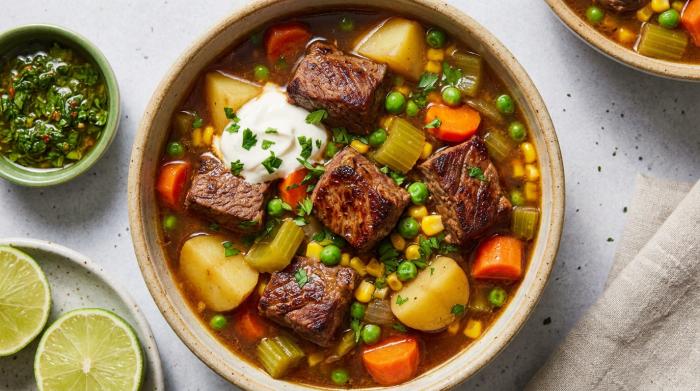
Cooking Hearty, Slow-Simmered Vegetable Beef Soup for Cold Nights takes time. The stewing beef needs 1 hour and 15 minutes of covered simmering to properly break down. This process melts the fat in economical cuts like chuck, creating extremely tender pieces alongside potatoes and green peas that hold their shape.
Choosing and searing the beef
You want an economical cut with plenty of marbling for the Soup Base. Chuck works very well, and so do boneless short ribs. The fat melts during the long simmer to keep the meat soft. You will cut the beef into small pieces that measure about 2/3-inch (1.75 cm) across. Small, bite-sized pieces are easy to eat from a spoon.
Before the meat goes into the pot, you must dry the pieces completely with paper towels. Wet beef will steam in the pan. A dry surface allows the meat to develop a dark crust. You also need to cook the meat in two or three batches. A crowded pot drops the temperature of the hot oil.
Building the thick broth
Once the seared beef comes out of the pot, the vegetables go in. Onions, garlic, celery, and carrots soften in the leftover oil. If the pan looks dry, you can introduce a small splash of fresh oil. You will thicken the cooking liquid by sprinkling flour directly over these softened vegetables. Stir the flour in until it coats everything evenly.
Next, you pour the low-sodium beef broth into the pot a little at a time while stirring. This slow addition keeps the flour from forming lumps. You will also add water and dry red wine. The alcohol in the wine cooks off completely as the liquid bubbles. You can substitute Guinness or a stout beer for the red wine to create a more intense taste. Tomato paste, bay leaves, and dried thyme complete the liquid mixture.
Timing the vegetables
The beef needs a head start to break down. You will return the meat to the pot, cover it, and let it simmer over medium-low heat for 1 hour and 15 minutes.
Potatoes and green peas go into the pot for the final 20 minutes of cooking. You add them late so they hold their shape. You can also mix in some green beans at this stage. Leave the pot uncovered for this final phase so the liquid reduces slightly.
Buttery Mushrooms (Optional)
You can include small, halved mushrooms in the soup. Do not drop them right into the simmering liquid. When they boil directly in the soup, they lose their savory browning. You should cook the mushrooms in a separate skillet with a little butter or oil instead. Toss these cooked mushrooms into the main pot during the last 5 minutes of simmering.
Serving and storage
Ladle the hot soup into bowls. Top each portion with a little fresh chopped parsley and black pepper. You will want something to dip into the broth. Crusty bread, a cheesy garlic loaf, or a classic Irish soda bread all make a great side.
This recipe makes a large batch. The leftovers keep very well. You can store the cooled soup in the refrigerator for four to five days. The liquid thickens and the taste improves after sitting overnight. You can also freeze the extra portions, as the cooked soup freezes exceptionally well.
Hearty, Slow-Simmered Vegetable Beef Soup for Cold Nights
Soup Base
- 1 lb stewing beef, cut into 2/3-inch (1.75 cm) cubes
- 2.5 cup low-sodium beef broth or stock
- 1 onion, chopped
- 3 garlic cloves, minced, about 1 tablespoon
- 2 celery ribs, cut into 1/3-inch (0.8 cm) slices
- 3 carrots, cut into 1/5-inch (0.5 cm) slices, larger pieces halved
- 2 tbsp tomato paste
- 1 cup frozen peas
- 2 potatoes, cut into 2/3-inch (1.5 cm) cubes
- 4 tbsp flour
- 1.5 tbsp olive oil, divided
- 1.5 cup dry red wine, Guinness beer, or stout
- 1.5 cup water
- 0.5 tsp salt and pepper
- 2 bay leaves
- 1 tsp dried thyme
Buttery Mushrooms (Optional)
- 6 oz small mushrooms, halved or quartered
- 1 tbsp butter or oil
We may earn a small commission from grocery & equipment links, at no cost to you. Disclosure.
Method
Soup Base
Buttery Mushrooms (Optional)
Soup Base
Substitutions
Pick budget-friendly cuts of beef with plenty of marbling, such as chuck roast or boneless short ribs, to build the best soup base.
Green beans make a great addition if you want to mix extra vegetables into the pot.
Storage
Store the soup in the refrigerator for four to five days, as the flavors actually deepen and improve after sitting overnight.
This cooked Hearty, Slow-Simmered Vegetable Beef Soup for Cold Nights freezes exceptionally well for future meals.
Serving
Portion the soup into bowls and garnish with fresh chopped parsley and black pepper alongside crusty bread, cheese bread, or soda bread for dipping.
Common mistakes
Avoid simmering the raw mushrooms directly in the broth, as sautéing them separately first preserves their savory browning.
Techniques
Dry the beef pieces thoroughly with paper towels to ensure they develop a deep brown crust when hitting the hot oil.
Always sear meat in multiple batches so the pieces do not crowd the pan and steam instead of browning.
Stirring flour directly into hot, fat-coated vegetables cooks off the raw starchy taste and prevents lumps from forming when you pour in the liquids.
- Store
- Store the soup in the refrigerator for four to five days, as the flavors actually deepen and improve after sitting overnight. This cooked Hearty, Slow-Simmered Vegetable Beef Soup for Cold Nights freezes exceptionally well for future meals.
Is this a good recipe to make ahead of time?
Yes, this Hearty, Slow-Simmered Vegetable Beef Soup for Cold Nights is an excellent make-ahead dish. The flavors actually deepen and improve after sitting overnight. You can store the cooked soup in the refrigerator for four to five days, and it also freezes exceptionally well.
Will there be alcohol in the final dish if I use wine or beer?
No, the alcohol from the dry red wine, Guinness, or stout cooks off entirely during the long simmer. It leaves behind a deep, intense flavor profile in the Soup Base without retaining any actual alcohol content.
Can I just add the raw mushrooms directly into the simmering soup?
Simmering the raw mushrooms directly in the pot will cause them to lose their savory browning. Taking the time to sauté the Buttery Mushrooms (Optional) in a separate skillet first preserves their roasted texture and flavor before you mix them in.
How do I avoid getting lumps of flour in the broth?
Sprinkling the flour directly over the softened vegetables coats them evenly and cooks off the raw starchy taste. Pouring the beef broth in a little at a time while you stir will prevent any clumps from forming in the liquid.
What should I serve alongside this soup?
Portion the soup into bowls and garnish each with fresh chopped parsley and black pepper. It is best enjoyed with crusty bread, a cheesy garlic loaf, or classic soda bread for dipping into the rich broth.
Why is it important to dry the beef before cooking?
Patting meat completely dry removes surface moisture that would otherwise turn into steam in the pot. This ensures the beef sears properly and develops a deep brown crust when it hits the hot oil.
Why do I need to sear the meat in multiple batches?
Adding too much meat to the pot at once drops the temperature of the oil and crowds the pan. Searing in smaller batches ensures the pieces brown aggressively instead of just steaming in their own juices.
Add a private note
Private to this device - jot your tweaks, swaps and timings. (Syncs to your account later.)
What to serve with it
See all →


You might also like
See all →


The Friday 3-recipe dinner plan 🧡
Every Friday: three tested weeknight dinners + one shopping list, ready to go. No spam, ever - unsubscribe anytime.