
Quick One-Bowl Sandwich Bread Without Yeast, Tall and Sliceable
You stir a thick batter together in one bowl and skip kneading entirely, and this sandwich bread without yeast still bakes up tall for slicing.
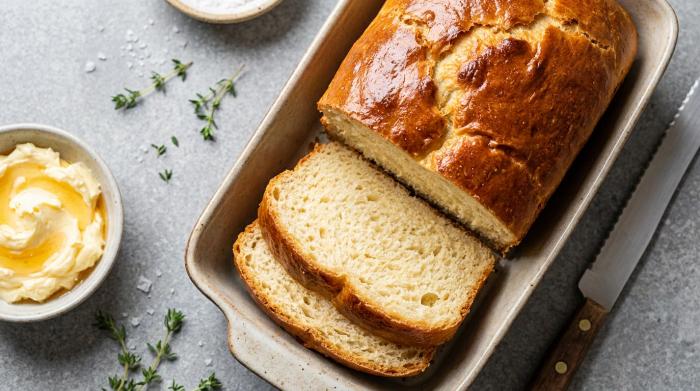
A loaf of quick one-bowl sandwich bread without yeast requires zero kneading and takes only 50 minutes of baking time. A thick batter of flour, warm milk, oil, and a large dose of baking powder replaces traditional yeast dough. The oil keeps the sliceable crumb soft for days.
The ingredients
The dry mix relies on 8 teaspoons of baking powder. This amount follows the standard ratio of 2 teaspoons of baking powder per 1 cup of flour. You can substitute the baking powder by adding 2 teaspoons of baking soda and 1 teaspoon of white vinegar to the milk.
You can use all-purpose, bread, or cake flour. You can also replace up to half of the all-purpose flour with whole wheat flour. Swap in a self-raising blend for the all-purpose plus the baking powder. Gluten-free flour will not hold this loaf together.
The recipe requires 1.5 teaspoons of kosher salt. Table salt has finer grains, so reduce the amount to 1 teaspoon if you use it. A full measure of table salt leaves the bread too salty. A small amount of white sugar adds flavor.
The batter uses no eggs to keep the crumb similar to traditional bread. Any type of milk works for the liquid. You can use dairy, non-dairy, low-fat, full-fat, or reconstituted powdered milk. You can even use water mixed with 1 tablespoon of plain oil or butter in place of the milk.
Mixing the batter
You pour the wet ingredients into a well in the dry ingredients. The mixture comes together into a thick batter. It remains stirrable, but it never becomes a kneadable dough.
You cannot freeform this loaf on a flat baking sheet. The batter requires the tall walls of a loaf pan for support.
Baking and covering the loaf
The bread starts baking at 430°F (220°C). You bake the batter uncovered for the first 30 minutes.
You must cover the pan with foil after those 30 minutes. A fully uncovered bake turns the crust heavy and deep brown. You then lower the oven temperature to 390°F (200°C) and bake the covered loaf for another 20 minutes.
Cooling and slicing
The baked loaf needs to cool in the pan for 5 minutes. You then use the overhanging parchment paper to lift the bread out.
You must let the bread cool completely on a wire rack for at least 45 minutes before slicing. This loaf lacks the firm structure of a traditional yeast bread when hot. Slices from a warm loaf will crumble at the edges.
Other pan sizes
You can bake this batter in an 8-inch (20 cm) round or square pan. This wider shape requires slightly less baking time.
You can also use a well-greased muffin tin. Bake the muffins at 350°F (180°C) for 20 to 25 minutes.
Storage and leftovers
The bread is at its very best the day you bake it. The oil provides essential moisture that keeps the bread soft the following day. It slices easily on the second day for sandwiches.
You can use the firm slices for:
- Toast
- Grilled cheese
- French toast
- Bread and butter pudding
You will need to lightly toast the bread by the third day to refresh the texture. The slices also work well for dunking in a bowl of soup or stew. The baked loaf freezes very well for long-term storage.
Quick One-Bowl Sandwich Bread Without Yeast, Tall and Sliceable
Ingredients
- 4 cup plain or all-purpose flour
- 8 tsp baking powder
- 3 tsp white sugar
- 2.25 cup warmed milk, any type
- 0.25 cup plain oil, such as vegetable, canola, sunflower, rapeseed, grapeseed, or light olive oil
- 1.5 tsp cooking or kosher salt, reduce to 1 tsp if using table salt
We may earn a small commission from grocery & equipment links, at no cost to you. Disclosure.
Method
Substitutions
You can swap up to half of the all-purpose flour for whole wheat flour if you prefer a heartier loaf.
To substitute the baking powder, use two teaspoons of baking soda and add one teaspoon of white vinegar directly to your milk.
This recipe relies on gluten to hold together and is not expected to hold together with gluten-free blends.
You can bake this batter in a well-greased muffin tin at 350°F (180°C) for 20 to 25 minutes instead of using a loaf pan.
Storage
The Quick One-Bowl Sandwich Bread Without Yeast, Tall and Sliceable stays moist through the next day thanks to the oil, but by the third day it will need a light toasting.
This baked loaf freezes perfectly if you want to save it for later use.
Always let baked goods cool all the way down before you seal them in a storage container to prevent condensation from making the crust soggy.
Serving
This loaf slices beautifully on the second day and makes a crisp grilled cheese and excellent French toast.
Common mistakes
Do not try to freeform this loaf on a baking sheet since the mixture is a thick, spoonable batter, nothing like a kneadable dough.
Always remember to reduce the salt to one teaspoon if you use fine table salt instead of kosher salt, otherwise the bread will be overly salty.
Baking the bread uncovered for the entire time ruins the crust, turning it heavy and unpleasantly dark.
Techniques
Slicing the bread before it cools completely leaves the edges prone to crumbling.
Lining your loaf pan with an overhang of parchment paper creates a convenient sling that makes lifting baked goods out completely effortless.
When mixing wet ingredients into dry, gently fold the batter just until the dry spots vanish to avoid creating tough, dense bread.
- Store
- The Quick One-Bowl Sandwich Bread Without Yeast, Tall and Sliceable stays moist through the next day thanks to the oil, but by the third day it will need a light toasting. This baked loaf freezes perfectly if you want to save it for later use. Always let baked goods cool all the way down before you seal them in a storage container to prevent condensation from making the crust soggy.
Can I make this Quick One-Bowl Sandwich Bread Without Yeast, Tall and Sliceable dairy-free?
Yes, you can use any non-dairy milk you prefer for the liquid. You can even use water mixed with one tablespoon of plain oil instead of milk.
Does this recipe really need eight teaspoons of baking powder?
Yes, this large amount is completely normal and necessary to lift the loaf since there is no yeast. It follows the standard baking ratio of two teaspoons of baking powder for every one cup of flour.
How do I prevent my quick bread from turning out dense and tough?
When combining your wet and dry ingredients, gently fold the batter just until the dry spots vanish. Overmixing the batter creates extra gluten development and leads to a very heavy loaf.
Can I bake this loaf freeform on a flat baking sheet?
No, what you make here is a thick, spoonable batter, not a kneadable dough. It requires the tall sides of a loaf pan or an 8-inch (20 cm) square pan to support its shape while baking.
Why does my bread crust get soggy when I put it in a storage container?
This happens if you seal baked goods away before they have cooled completely. Trapped residual heat releases steam that causes condensation, so always wait until the loaf is entirely cold on the wire rack before packing it up.
What is the best way to serve slices that are a few days old?
By the third day, the crumb will benefit from a light toasting to refresh its soft texture. Firm leftover slices work beautifully as French toast, make a crisp grilled cheese, and stand up to dunking into hearty soups.
Can I use this batter to make muffins instead of a whole loaf?
Yes, you can divide the batter evenly into a well-greased muffin tin. Bake the muffins at 350°F (180°C) for 20 to 25 minutes.
Add a private note
Private to this device - jot your tweaks, swaps and timings. (Syncs to your account later.)
What to serve with it
See all →


You might also like
See all →

The Friday 3-recipe dinner plan 🧡
Every Friday: three tested weeknight dinners + one shopping list, ready to go. No spam, ever - unsubscribe anytime.