Savory Beef and Vegetable Japchae (Korean Noodles)
Tender beef and crisp vegetables make this traditional Japchae (Korean noodles) a satisfying meal that comes together quickly in separate batches.
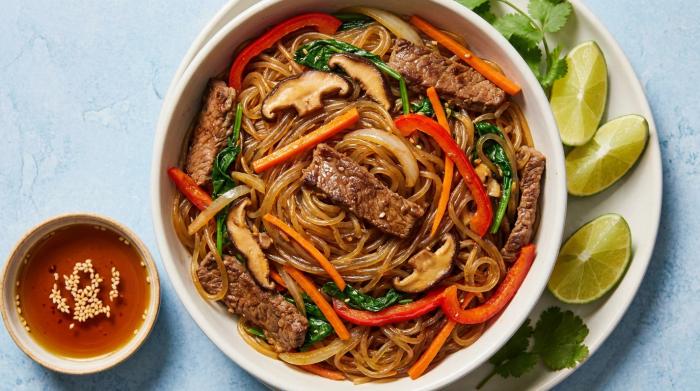
Sweet potato glass noodles, crisp vegetables, and thinly sliced short ribs cook separately before you toss them together in a simple sesame and soy dressing. You cook the components in batches to keep the vegetables crisp and the meat juicy. This Savory Beef and Vegetable Japchae (Korean Noodles) yields 5 servings of satisfying, traditional food.
Noodles & Dressing
You will need 8 oz (250 g) of dried sweet potato noodles, which go by the name dangmyeon and are produced from sweet potato starch. Cooking these in boiling water makes them semi-transparent. If necessary, swap them out for any thin noodle, such as vermicelli or glass noodles.
You need light or all-purpose soy sauce for the dressing. This provides the right salt balance. Dark soy sauce makes the color and flavor too intense. Toasted sesame oil gives the dressing a strong, toasty depth of color and a distinct nutty flavor. Untoasted yellow sesame oil does not work as well here.
Beef & Marinade
The meat stays juicy during rapid cooking because beef short ribs have high marbling. You trim the thick surface fat from the ribs, cut the meat off the bone, and halve the boneless chunks horizontally. Cut these pieces into thin strips measuring about 1/5 inch by 2/5 inch by 2 inches (5 mm thick, 1 cm wide, and 5 cm long).
You can use several other cuts instead of short ribs:
- Boneless rib eye or scotch fillet
- Rump or sirloin
- Porterhouse
You can velvet economical beef cuts to make them tender. Toss the beef with baking soda, let it rest for twenty minutes, rinse it well, and pat it dry.
Place the strips in a bowl with soy sauce, white sugar, finely minced garlic, and black pepper. The beef needs to marinate for 15 to 20 minutes. You cook the rest of the meal while the meat rests.
Boiling the sweet potato noodles
Boil the sweet potato noodles in a pot of water for 8 minutes.
You must rinse the cooked noodles briefly under cold tap water and shake them dry in a colander. This step stops the cooking process. Transfer the drained noodles to a very large mixing bowl along with the dressing ingredients. Do not mix them yet.
Vegetables & Garnish
You cook the vegetables in staggered batches based on their individual cook times. This method prevents flavor bleeding and reduces the amount of oil you need.
First, stir-fry the onion wedges, the white parts of the green onion, and the fresh shiitake mushrooms. Shiitake mushrooms possess an intense, earthy flavor. Standard white or cremini mushrooms work as a direct substitute. Cook these for just a few minutes until they begin to soften. Pour the hot vegetables directly over the unmixed noodles.
The vegetables turn soggy if you overcook them. You must remove them from the pan while they maintain a tender-crisp texture.
Next, cook the carrots and bell pepper for a minute and a half. Add the baby spinach and the green parts of the green onion to the pan. Cook until the spinach wilts.
You have a few options for the leafy greens:
- Chopped English spinach
- Kale
- Leaves from Asian greens
Transfer this second batch of vegetables to the large bowl.
Searing the meat and assembling the bowl
Cook the marinated beef strips in oil over high heat for exactly 90 seconds. Thinly sliced beef dries out very quickly in the pan. You want the strips to lose their raw pink spots and turn faintly brown. Add the hot beef to the bowl.
All the hot ingredients now sit in layers over the noodles and sauce. Do not mix anything until every component is in the bowl. You disrupt the assembly process if you mix the noodles and sauce early.
Add a generous portion of white sesame seeds. Toss the complete dish vigorously off the heat. You must use an oversized bowl to avoid spilling the large volume of food. Keep tossing until the noodles take on a brown stain from the soy dressing.
Serving and storing leftovers
Move the finished meal to a serving plate and sprinkle the reserved pinch of sesame seeds on top.
Customarily, you present this meal while it is warm or simply resting at ambient heat, rather than serving the noodles steaming hot.
Keep extra portions in the refrigerator for a maximum of three days. Do not place this meal in the freezer. When you want to eat the chilled leftovers, simply give them a gentle heating beforehand.
Savory Beef and Vegetable Japchae (Korean Noodles)
Beef & Marinade
- 1.2 lb bone-in beef short ribs (10 oz / 300g boneless), recommended
- 10 oz boneless beef short ribs, recommended
- 10 oz scotch fillet or boneless rib eye, or other steak, recommend tenderizing
- 2 tsp finely minced garlic
- 2 tsp white sugar
- 2 tsp all-purpose or light soy sauce
- 0.5 tsp black pepper
Noodles & Dressing
- 0.5 tsp finely minced garlic
- 8 oz dried sweet potato noodles, dangmyeon
- 2 tsp white sugar
- 1.5 tbsp sesame oil
- 0.25 cup all-purpose or light soy sauce
- 0.5 tsp kosher or cooking salt
- 0.5 tsp black pepper
Vegetables & Garnish
- 1 onion, peeled, halved, and sliced into 1/4-inch (6 mm) wedges
- 3 green onion stems, cut into 2-inch (5 cm) lengths, white and green parts separated
- 7 oz fresh shiitake mushrooms, stems removed and cut into 1/5-inch (5 mm) slices
- 2 carrots, peeled and cut into 1/8-inch (3 mm) batons
- 1 red bell pepper or capsicum, cut into 1/5-inch (0.5 cm) slices
- 4.5 cup tightly packed baby spinach
- 2 tbsp white sesame seeds
- 4 tbsp vegetable oil or other plain oil
- 1 tsp kosher or cooking salt, divided
We may earn a small commission from grocery & equipment links, at no cost to you. Disclosure.
Method
Beef & Marinade
Noodles & Dressing
Vegetables & Garnish
Substitutions
Any thin noodle can stand in for the sweet potato noodles, so feel free to use vermicelli or glass noodles instead.
For the Beef & Marinade, boneless rib eye, scotch fillet, rump, sirloin, or porterhouse cuts work perfectly instead of beef short ribs.
Feel free to use standard white or brown cremini mushrooms if you do not have fresh shiitake mushrooms for the Vegetables & Garnish.
Storage
Keep any leftover portions in the refrigerator for up to three days, and avoid putting the meal in the freezer.
Serving
Rather than being served piping hot, Savory Beef and Vegetable Japchae (Korean Noodles) is traditionally enjoyed warm or allowed to cool to ambient temperature.
Common mistakes
Avoid using dark soy sauce because it will make the color and flavor of the dish too intense.
Mixing the Noodles & Dressing before all the hot Vegetables & Garnish and Beef & Marinade are added disrupts the assembly process.
Tossing the ingredients in a standard-sized bowl will cause spilling, so use an oversized mixing bowl as specified.
Techniques
The Vegetables & Garnish are cooked in staggered batches based on cook times to prevent flavor bleeding and reduce oil usage.
If using an economical cut for the Beef & Marinade, velvet the meat by tossing it with baking soda, resting for twenty minutes, rinsing, and patting dry before marinating.
Rinse the cooked sweet potato noodles briefly under cold tap water and shake them dry to stop the cooking process.
Always slice and measure every ingredient before you begin stir-frying to ensure a smooth and uninterrupted cooking process.
Ensure thin cuts of meat hit a very hot pan so they sear rapidly and develop flavor without overcooking or steaming.
- Store
- Keep any leftover portions in the refrigerator for up to three days, and avoid putting the meal in the freezer.
Can I use a different type of noodle?
Yes, if you cannot find sweet potato noodles, you can easily use vermicelli, glass noodles, or any other thin noodle.
What if I do not have beef short ribs?
You can use boneless rib eye, scotch fillet, rump, sirloin, or porterhouse cuts instead.
How long do leftovers last?
Keep your leftovers in the refrigerator for a maximum of three days. Avoid putting this meal in the freezer. The chilled ingredients only need a light warming before consumption.
Should I serve this dish steaming hot?
No, these noodles are traditionally enjoyed warm or allowed to cool to ambient temperature.
Can I use dark soy sauce for the dressing?
Avoid using dark soy sauce. It will make the color and flavor of the meal far too intense.
Why do I need to cook the vegetables in separate batches?
Cooking them in staggered batches based on their individual cook times prevents flavor bleeding. It also reduces the total amount of oil you need to use.
How do I tenderize an economical cut of beef?
You can velvet the meat by tossing it with baking soda and letting it rest for twenty minutes. Rinse the beef well and pat it completely dry before adding your marinade.
Why should I slice and measure everything before I start cooking?
Preparing every ingredient before you begin ensures a smooth and uninterrupted stir-frying process. Things move very quickly once the pan is hot.
How do I correctly sear the thinly sliced meat?
Ensure the thin cuts hit a very hot pan so they sear rapidly. This develops a rich flavor without overcooking or steaming the meat in its own juices.
Add a private note
Private to this device - jot your tweaks, swaps and timings. (Syncs to your account later.)
What to serve with it
See all →

You might also like
See all →

The Friday 3-recipe dinner plan 🧡
Every Friday: three tested weeknight dinners + one shopping list, ready to go. No spam, ever - unsubscribe anytime.